
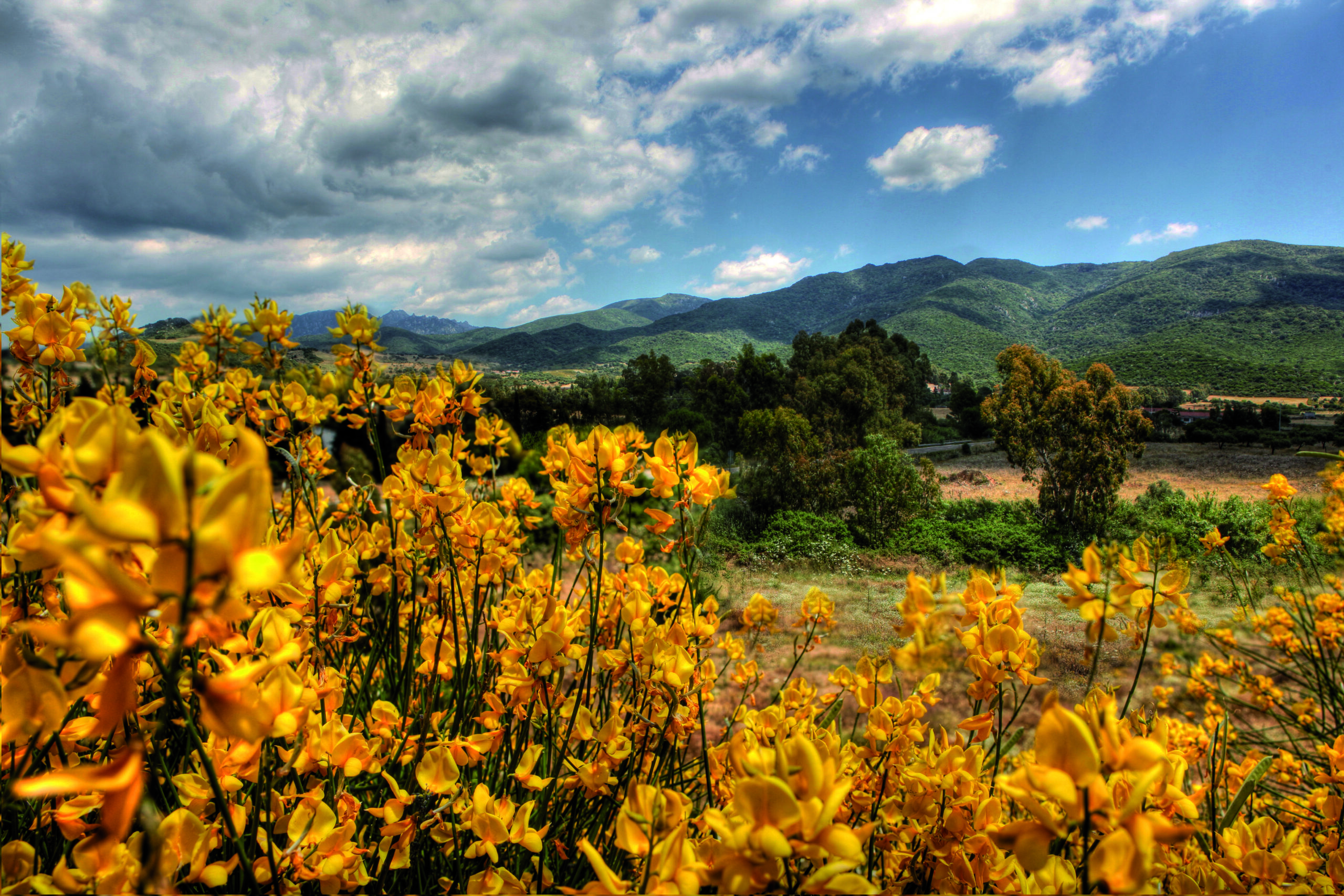
Mountains
The mountains of Castiadas are characterized by the dark green of junipers and numerous strawberry trees scattered throughout the Castiadas territory, giving the impression that time has stood still here due to its character, its natural beauty not yet altered by human hands.
These wonderful forests, a popular destination for numerous tourists, will not fail to amaze you, with their enormous holm oaks that have escaped human intervention, the fragrant and twisted centuries-old junipers, the flowering strawberry trees with their red berries, the scents of various local essences such as myrtle, rosemary, rockrose, with the unmistakable colors of pink and white oleanders.
From the highest point at Minni Minni, reachable through guided tours, by mountain bike and on foot, you can see the entire territory of Castiadas.
The Mountains of Castiadas represent a territory accessible from a tourist perspective both for hiking and for sports such as climbing on the fabulous granite rocks that rise majestically, displaying a breathtaking panorama as if they were “lookouts” that gave Castiadas its name.
The numerous springs and various streams present in these mountains complement a complete territory that is still rich in resources and accessible.
The Seven Brothers
This is a mountain complex, part of a vast outcrop that extends along the entire length of Sardinia and even reaches Corsica. The Sarrabus area, the one of interest to us, is only marginally touched by the granite complex. In fact, in addition to the hard stone, there are also outcrops of schist in the area, dating back to the Silurian period.
Perhaps the most surprising note is the presence, in a context characterized by strong aridity, of water sources that never appear in excessive flow. There are in fact numerous springs in the area. While very little remains of the ancient forest, almost completely destroyed due to improper use by humans.
At the beginning of World War II, the forest was damaged for military reasons, and the remnants of state-owned forest were affected by logging around 1950 by private contractors for the production of precious charcoal and firewood. Let’s not forget that the advent of mechanization encouraged, with the opening of roads, the cutting of trees, while the plague of fires cast an increasingly disturbing shadow, still not dispelled today.
Currently, some areas under human control are destined to regain their original verdant appearance. The presence of the Former Penal Colony has also marked this territory. The old settlements are present, now increasingly sparse, as well as a dense network of paths most likely used by prisoners and guards for all movements.
Many of these venture into the thick of the forest, and not being marked, it is always advisable for hikers to have an expert of the territory present, because losing orientation is absolutely possible. On June 9, 1999, with a regional law, the state forestry agency of the Sardinia region was abolished and the Sardinian Forestry Agency was established.

